
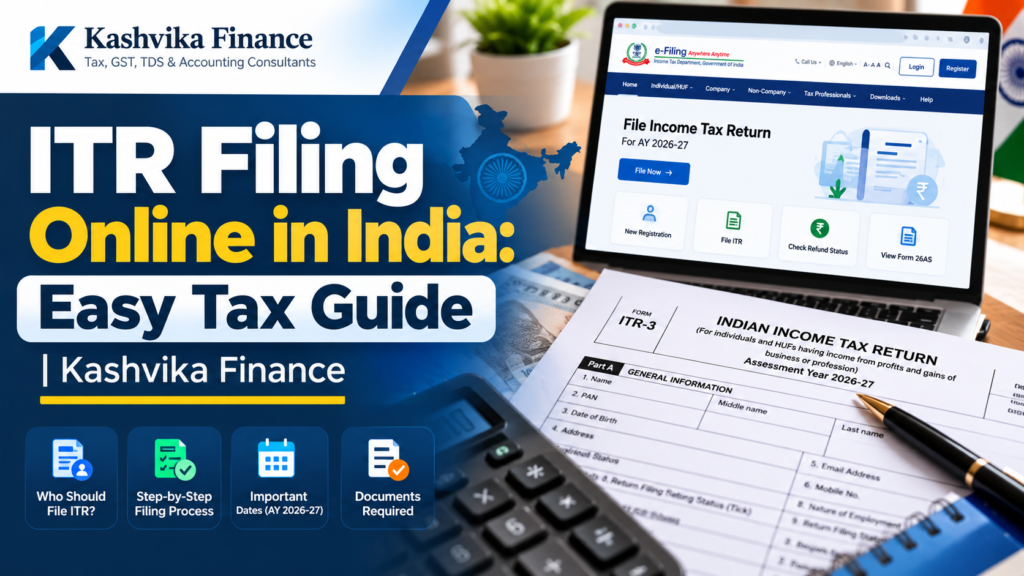
Online Income Tax Return Filing in India: A Complete Guide for Taxpayers
Filing your Income Tax Return (ITR) is an important part of managing your finances. Whether you earn a monthly salary, work as a freelancer, run a business, or invest in the stock market, understanding income tax return filing can help you stay organized and meet your tax obligations.
Although the online filing process has become more convenient, choosing the correct ITR form and understanding tax rules can still be confusing. Kashvika Finance aims to help readers explore financial information and available services to make more informed decisions.
In this guide, discover how to file ITR online, which documents you may need, how tax regimes differ, and how to check your refund status.
What Is Income Tax Return Filing?
An Income Tax Return (ITR) is an official document filed with the Income Tax Department of India that provides details of your annual income, eligible deductions, and taxes paid during a financial year.
ITR filing helps eligible taxpayers comply with tax regulations, report financial information, and claim refunds when excess tax has been paid. Your filing obligations depend on your income and other conditions prescribed under applicable law.
Discover helpful financial insights and explore a range of financial services by visiting Kashvika Finance – Your Financial Partner.
Who Needs to File an ITR?
Income tax return requirements vary according to income, financial activities, and applicable regulations. Filing may be necessary for salaried employees, freelancers, business owners, and individuals earning reportable investment income.
Certain conditions can also make filing mandatory even when income is below the general taxable threshold. Therefore, check the rules applicable to your circumstances rather than assuming that no tax payable means no return is required.
If you want to explore additional financial resources, visit Kashvika Finance and discover the services available for your needs.
Documents Required for ITR Filing
Preparing your documents before starting online tax filing can save time and reduce errors. Commonly required information includes:
- PAN and Aadhaar: For applicable identification and verification requirements.
- Form 16: Useful for reviewing salary income and TDS deducted by an employer.
- Bank Account Details: Required to ensure eligible income tax refunds can be credited to your bank account.
- Form 26AS and AIS: Help verify tax credits and reported financial information.
- Investment records: Required when claiming eligible deductions.
- Capital Gains Statements: Documents showing profits or losses from the sale of shares, mutual funds, property, and other capital assets, where applicable.
The documents you need depend on your income sources and the ITR form applicable to you.
Step-by-Step Guide to Filing Your Income Tax Return Online
Follow these steps to file your return through the official Income Tax e-Filing portal.
Step 1: Open the official portal. Visit incometax.gov.in and log in using your PAN as your user ID.
Step 2: Start your return. Open the e-File section, select Income Tax Returns, and choose the filing option.
Step 3: Select the assessment year. Choose the correct year for the income you are reporting.
Step 4: Choose the right ITR form. Select a form according to your income sources and eligibility.
Step 5: Check your information. Review income details, deductions, TDS, bank information, and the calculated tax liability before submission.
Step 6: Submit and verify. Submit the return and complete e-verification within the prescribed period.
Need more financial information? Visit Kashvika Finance to explore our website and available services.
Which ITR Form Should You Choose?
Selecting the appropriate ITR form is crucial to ensure your income tax return is filed correctly and complies with applicable tax regulations.
ITR-1 is generally available to eligible resident individuals with specified types and limits of income, subject to the form’s conditions.
ITR-2: This form is generally used by individuals and Hindu Undivided Families (HUFs) who are not eligible to file ITR-1 and do not earn income from a business or profession.
Freelancers, business owners, and certain traders may require other forms. Always verify the latest eligibility criteria before filing.
ITR Filing Deadlines and Late Submission Fees in India
The applicable ITR filing deadline depends on your taxpayer category and whether audit requirements apply. Missing the deadline may result in late-filing fees, interest, or restrictions on carrying forward certain losses, depending on the applicable rules.
Check the latest official notifications before relying on any published due date. Preparing your documents early can help you avoid unnecessary last-minute stress.
New Tax Regime vs Old Tax Regime
The new and old tax regimes offer different tax rates, deductions, and exemptions. The new regime generally provides concessional rates with fewer deductions, while the old regime allows eligible taxpayers to claim specified deductions and exemptions.
The most suitable tax regime depends on your total income, available deductions, and the tax benefits you qualify for. Compare both regimes before deciding which is more suitable for your circumstances.
For more information about available financial services, explore Kashvika Finance.
How to Check Your ITR Refund Status
After filing and verifying your return, log in to the official e-Filing portal to check the status of your return or refund. Ensure your bank account details are correct and complete any required validation.
Refund processing can take time, so review the status displayed on the portal for updates or further instructions.
Frequently Asked Questions
Can I file my ITR without a CA?
Yes. You can file your return yourself through the official portal if you understand your tax situation and choose the correct form.
What Are the Consequences of Filing Your Income Tax Return After the Due Date?
Late filing may involve fees, interest, and other restrictions, depending on your circumstances.
How can I get help with financial services?
Visit Kashvika Finance – Your Financial Information Resource to explore the services and information available on our website.
Conclusion
Filing your income tax return online becomes easier when you prepare your documents, choose the appropriate form, verify yourfinancialdetails, andsubmit your return correctly.
For additional financial information and to explore available services, visit Kashvika Finance. Make informed financial decisions by using reliable information and checking official tax guidance whenever rules or deadlines change.
Disclaimer: This article is for general educational purposes and is not professional tax advice. Verify current rules with the Income Tax Department or consult a qualified taxprofessional.
Comments