
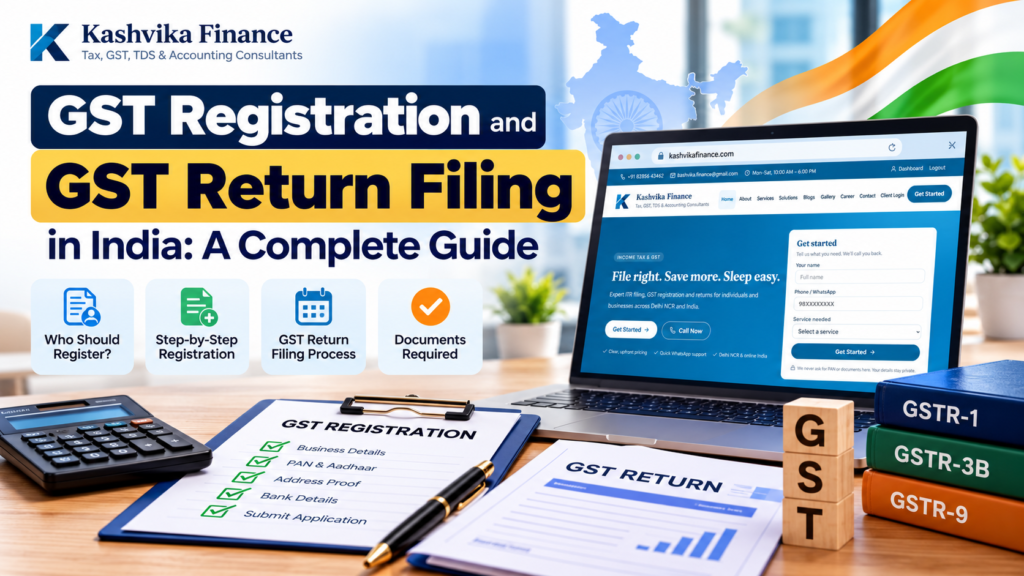
GST Compliance in India: Registration and Return Filing Explained
Managing a business requires more than simply selling goods or delivering services to customers. Business owners must also understand their tax responsibilities and maintain proper financial records. In India, Goods and Services Tax (GST) is an important part of business compliance, making GST registration and return filing essential topics for many entrepreneurs.
Whether you operate a retail shop, offer professional services, manufacture products, or manage an online business, understanding GST requirements can help you avoid compliance problems.
Kashvika Finance helps readers explore financial information and available business services. This guide explains GST registration, the documents needed, the online application process, common GST returns, and the importance of timely filing.
What Is GST Registration in India?
Goods and Services Tax (GST) is an indirect tax applicable to the supply of goods and services under India’s GST framework. GST registration is the process through which an eligible business registers with the tax authorities and receives a unique Goods and Services Tax Identification Number (GSTIN).
This identification number is used for relevant tax filings, invoices, and other GST-related activities. Registration requirements depend on factors such as business turnover, the type of supplies, location, and applicable legal provisions.
Businesses should review their eligibility before applying. For official registration information, visit the GST Portal.
Which Businesses Need GST Registration?
GST registration may be compulsory for businesses that meet the prescribed turnover criteria or fall under specific categories covered by GST law.
Eligible traders, manufacturers, service providers, and e-commerce businesses should examine the rules applicable to their activities. Certain exemptions and special provisions can affect whether registration is necessary.
Instead of assuming that every business follows the same requirements, assess your business structure and transactions carefully. You can also explore relevant financial resources and available services through Kashvika Finance.
Documents Required for GST Registration
Having the required documents prepared in advance can simplify your GST registration application. The paperwork needed may differ depending on your business type and legal structure.
- PAN details: For the proprietor or business entity, as applicable.
- Identity verification: Aadhaar and other details where required.
- Business address proof: Documents confirming the principal place of business.
- Business constitution documents: Such as a partnership deed or incorporation documents, where applicable.
- Photographs and Authorised Representative Information: Details and photographs of the applicant or authorised signatory, as required for the business category.
- Verified Contact Details: An active email address and mobile number for OTP verification and official GST communications.
Depending on the details of your application and the verification process, the GST authorities may ask you to provide additional documents or information.
How to Register for GST Online
Businesses can apply through the official GST portal by following these general steps.
Step 1: Open the GST Portal
Visit www.gst.gov.in and navigate to Services, followed by Registration and New Registration.
Step 2: Enter Applicant Details
Select the appropriate taxpayer category, state, and district. Provide your business name as recorded in the PAN database, PAN details, email address, and mobile number.
Step 3: Complete Verification
Verify the required contact details using the OTPs sent to your registered email address and mobile number. The portal generates a Temporary Reference Number (TRN) for continuing the application.
Step 4: Complete the Application
Use your TRN to access the application and enter the requested business, address, authorised signatory, and goods or services information.
Step 5: Submit and Track Your Application
Upload the applicable documents, complete the prescribed authentication process, and submit the application. Save your Application Reference Number (ARN) to track its status.
The application must satisfy the applicable requirements before registration can be approved.
What Is GST Return Filing?
GST return filing involves submitting prescribed information about business transactions, outward supplies, and tax liability through the GST system.
The return or statement required depends on your registration category. Common forms include:
- GSTR-1: Reports details of outward supplies for applicable registered taxpayers.
- GSTR-3B: A summary GST return that eligible taxpayers use to report their tax obligations and pay the applicable taxes.
- GSTR-4: Applicable to eligible taxpayers covered by the composition scheme, subject to current rules.
Filing frequency and requirements vary according to the taxpayer’s category and applicable provisions. Check the official portal for the forms and filing schedule relevant to your business.
## Advantages of Timely GST Return Submission for Businesses
Submitting GST returns within the applicable deadlines helps businesses maintain accurate compliance records. It also supports proper reporting of transactions and tax liabilities.
Delayed or missed filings may lead to late fees, interest, or other consequences under applicable rules. Keeping your invoices, sales and purchase records, along with tax payment details, properly organised can help simplify the GST return filing process.
For additional business and financial information, explore Kashvika Finance and discover the services available for your needs.
Frequently Asked Questions About GST
Is GST registration necessary for every business?
No. The requirement depends on turnover, business activities, location, exemptions, and other provisions under GST law.
Can I complete GST registration online?
Yes. Eligible applicants can submit their registration applications through the official GST portal.
Which returns are commonly used for GST compliance?
GSTR-1 and GSTR-3B are commonly used by applicable regular taxpayers, while other categories may follow different filing requirements.
## Penalties and Risks of Missing GST Return Filing Deadlines
Late filing can result in applicable fees, interest, or other consequences depending on the taxpayer’s circumstances and current regulations.
Conclusion
GST registration and return filing are important responsibilities for businesses operating in India. Understanding the applicable registration requirements, organising your documents, selecting the correct forms, and meeting deadlines can help improve your compliance process.
For more financial information and to explore available business services, visit Kashvika Finance. Stay informed, maintain accurate records, and consult a qualified tax professional when your business requires specialised GST guidance.
Disclaimer: The information provided in this article is for educational purposes and should not be considered a substitute forprofessionaltax or legal guidance. GST rules and filing requirements may change. Verify the latest provisionson the official GST portal or consult a qualified tax professional.
Comments